

In the spotlight Milen Petrov, musician and filmmaker
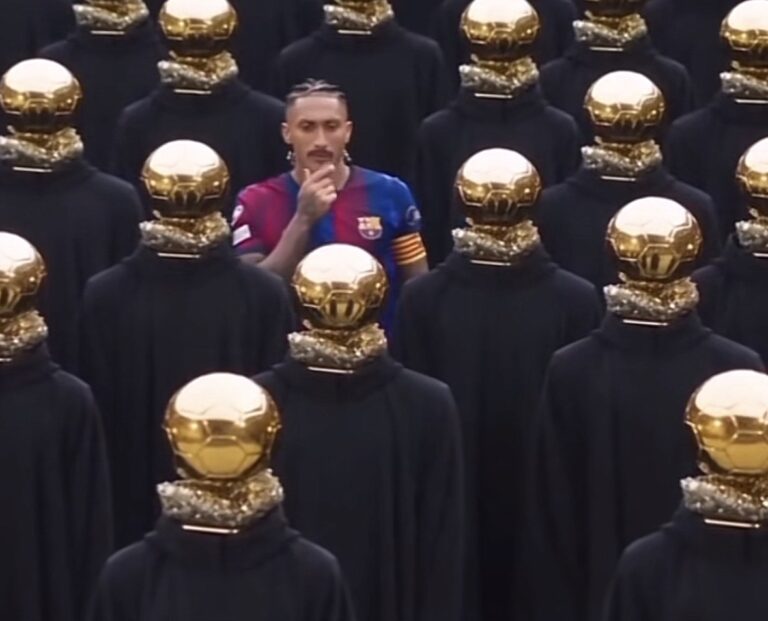
In April, Romain Gavras released Storm, a seven-and-a-half-minute video for GENER8ION featuring Yung Lean. It was shot on film, with dozens of performers and choreography that took serious planning to pull off.
By September it had a second life, and not the one Gavras intended. AI recreations were everywhere on TikTok and Instagram. The choreography and camera moves were copied almost exactly, but the performers were swapped for celebrities, animals and cartoon characters. Tools like Higgsfield’s Genjutsu made it easy, and other platforms started offering ready-made templates.
Gavras told Vulture he found it fascinating and frustrating in equal measure. All that human effort, reproduced with a few clicks.
From a social media angle, I find it interesting. The original earned the attention. The AI versions turned that attention into participation. Imitation has always been part of online culture, from memes to remixes to challenges. What’s new is how easy it has become. Things that used to take real skill can now be copied and posted by almost anyone.
So what happens to originality when execution is cheap?
Can AI copy creativity, or only its results?
We put this question to Milen Petrov, a musician and filmmaker who uses AI in his music, film and advertising work. He uses these tools a lot, and he’s still sceptical that they can come up with truly original ideas.
He doesn’t pretend humans create in a vacuum. Artists have always borrowed from each other. But he draws a line between taking inspiration and lifting the most recognisable parts of someone else’s work. With a tool like Suno, he says, you get polished, professional-sounding music in minutes. What’s missing is the unexpected leap that makes a piece memorable.
Storm fits that. AI can copy the choreography, the camera and the look, but someone else made the call to put those things together in the first place. The technology will keep improving, of course, so none of this is settled. Still, as imitation gets better, does originality become worth more?
More content, same amount of attention
This matters for anyone working in social media or communications. A September analysis from Exponential View (Azeem Azhar, Hannah Petrovic and Marija Gavrilov) shows how fast AI-made material is flooding platforms. One number stood out to me: in June, more than 50% of new music delivered to Deezer was fully AI-generated, yet those tracks made up only 1–3% of streams.
That doesn’t prove listeners dislike AI music, since discovery and platform dynamics play a big part. But it does show a widening gap between how much gets made and how much gets noticed.
The same analysis points the other way too. Pocket FM says AI supports 93% of its content production, and some of its AI-assisted titles have done very well commercially. So AI involvement alone doesn’t decide whether something lands.
For brands, that’s the real takeaway. Making content is getting faster and cheaper. Earning attention and building a connection with an audience is still hard. The question may shift from how much we can produce to how well we understand what people actually want to engage with.
Will human-made work become a boutique experience?
Milen made a prediction that stuck with me: human-made art could become a boutique experience.
As AI music, video and ads become the norm, work made by people may be valued for the craft and the human story behind it, a bit like classical music or opera, which people value for what makes them distinctive rather than for being the easiest entertainment.
I’m not sure it’s inevitable. AI is also a useful creative partner, and it lets small teams try ideas they couldn’t afford before. Plenty of viewers may not care who or what made something, as long as it entertains them or moves them.
What I’d like to know is whether the process itself becomes part of the value. Will knowing how something was made change how people respond to it? Or will the human-versus-AI distinction fade? Those are questions audiences can answer for us, through what they say, share and react to, which is exactly what social media intelligence is for.
Where this leaves us
Storm captures a contradiction in digital culture. AI let thousands of people join a creative trend and introduced the original to new audiences. It also raised real questions about ownership and about the labour behind the work.
Both sides are true. Creators and brands can now experiment faster than ever, and standing out is harder when almost anything can be recreated. For those of us studying audience behaviour, the difference between volume, engagement and real cultural impact matters more every month.
When anything can be generated, what people actually choose to watch, share and talk about is the thing worth understanding. Maybe the future of creativity isn’t producing more, but making something people find meaningful.
Further reading:
Visual: